The Rise of the Food Truck and Why They Are Here to Stay (And How to Bring That Experience Home)

Turn a corner in almost any city today, and you'll run into one: a line of hungry people standing in front of a truck, waiting for something hot, fast, and better than what's on the menu two doors down. Food trucks aren't a passing trend anymore — they're a permanent fixture of how people eat. Here's why they've taken over, and how you can recreate that same made-to-order, street-food magic in your own backyard.
Quick picks if you're short on time:
Pick | Best For | Typical Price* |
Best overall food-truck-style griddle | $150–$200 | |
Best budget pick | $90–$140 | |
Best taco-night add-on | $10–$16 |

Why Food Trucks Have Taken Over
Food trucks solve a problem regular restaurants can't: they bring genuinely interesting food to wherever people already are — office parks, festivals, breweries, college campuses — instead of asking people to come find it. That convenience is part of the appeal, but it's not the whole story. A single city block can have a truck slinging Korean tacos parked next to one doing wood-fired pizza and another doing loaded fries, and the menu changes by the week. That kind of variety, at a lower price point than a sit-down restaurant, is hard to compete with.
Where It All Started
The concept is older than most people think. The first food truck is generally credited to Charles Cretors, who rolled out a steam-powered popcorn wagon in 1893. What started as a novelty snack cart evolved over the next century into the fully-loaded mobile kitchens on the road today — trucks capable of turning out everything from Neapolitan-style pizza to Filipino barbecue with the same speed and quality as a brick-and-mortar restaurant.
What Makes Food Truck Food Different
Ask any regular why they keep coming back to their favorite truck, and you'll hear some version of the same answer: it doesn't taste like anywhere else. Truck owners tend to cook the food they grew up on or fell in love with while traveling, which means menus lean toward bold, specific, often global flavors instead of watered-down, crowd-pleaser versions. Combine that with a compact menu the crew can execute fast, cashless payment, and the ability to move to wherever the crowd is, and you've got a business model built entirely around convenience without sacrificing flavor.
Craving the Food Truck Experience at Home? Here's the Gear That Gets You There
If you've ever eaten off a truck and thought "I wish I could make this at home," the good news is that most of what makes truck food great isn't a secret ingredient — it's the equipment. A flat-top griddle, high heat, and the right serving setup will get you 90% of the way to that same experience in your own driveway.
Best Portable Griddles for Food-Truck-Style Cooking
A flat-top griddle is the single closest thing to owning a mini food truck. It's what most trucks actually cook on, and it's what lets you sear smash burgers, stir-fry, and griddle quesadillas all on the same surface.
Blackstone 22" Tabletop Griddle — Best Overall. This is the griddle most food-truck-style home cooks land on, and for good reason: enough cooking surface for a full meal, a built-in grease management system, and a footprint that fits on a table or cart rather than needing its own patio real estate.

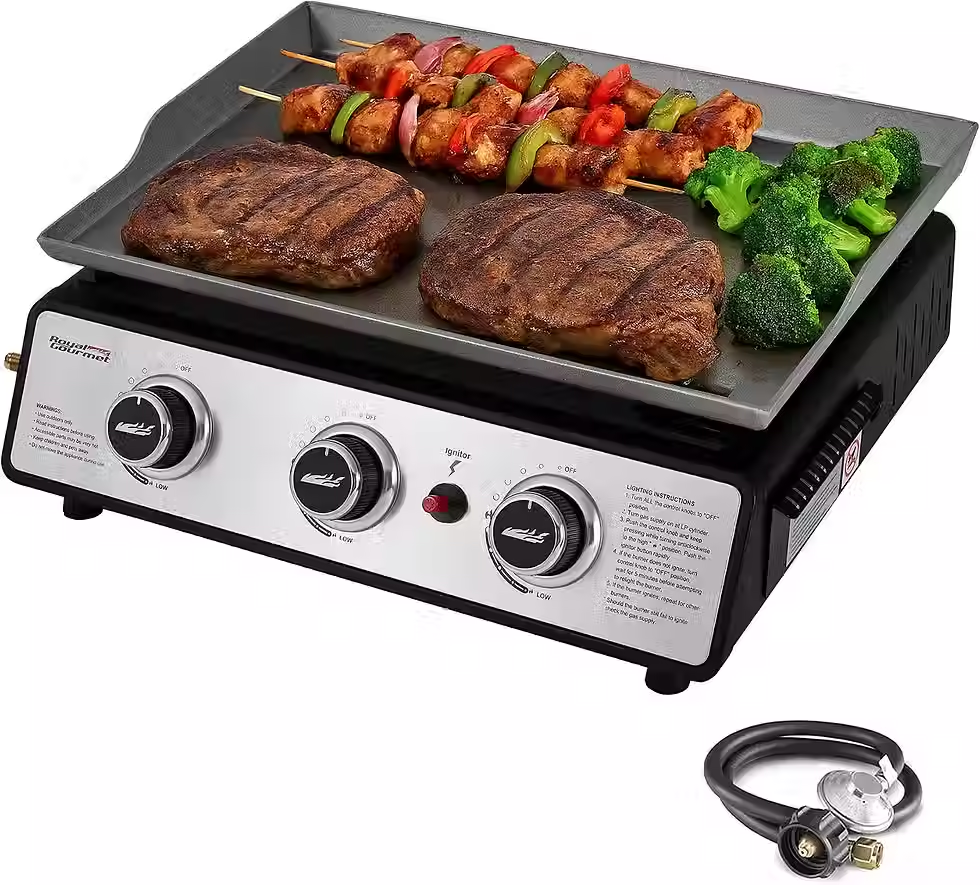
Royal Gourmet 3-Burner Tabletop Griddle — Best Budget Pick: A more affordable way into flat-top cooking, with independently controlled burners so you can run different heat zones for different foods at once — handy if you're doing a taco bar with meat on one side and veggies on the other.
Ninja Woodfire Outdoor Grill & Griddle — Best for Small Spaces. If patio space is tight, this combo unit grills, griddles, and even smokes in one footprint, which makes it a good fit for apartment balconies or smaller backyards.

Taco & Street-Food Night Essentials
Once you've got the griddle sorted, a few small pieces make the whole spread feel like it came off a truck instead of out of a home kitchen:
Insulated tortilla warmer pouch — keeps a stack of tortillas soft and warm for up to an hour, which matters more than people expect once you're serving a crowd.
Ceramic tortilla warmer with lid — a sturdier, table-ready option if you want something you can leave out for guests to serve themselves from.
A set of small serving bowls for salsas, pickled onions, and toppings, so people can build their own plate the way they would at the truck window.
Thinking About Starting Your Own Food Truck?
For readers dreaming bigger than backyard cookouts, a few pieces of gear consistently show up on real food truck startup checklists — and it doesn't hurt that they're genuinely useful in a home kitchen too:
An instant-read digital thermometer for food safety checks
Insulated food carriers for transporting hot food without losing temperature
A portable generator for off-grid power
A folding stainless prep table for extra workspace
If this is a real path you're considering, it's worth researching your local health department's permitting requirements before buying anything — rules vary a lot by city and county.
FAQ
What's the difference between a food truck and a food cart? A food truck is a full vehicle with its own kitchen equipment built in, while a food cart is a smaller, often non-motorized setup that has to be towed or pushed into place. Trucks generally offer more menu variety because they have more equipment and space to work with.
Can I really recreate food truck flavors at home? Largely, yes. Most of what makes truck food distinctive is high, even heat and a menu built around a few things done really well — both of which a flat-top griddle setup replicates at home.
How much does it typically cost to start a food truck? Costs vary widely by market and truck condition, but new owners should budget for the vehicle or trailer, kitchen equipment, permits and licensing, and enough working capital to cover the first few slow months. It's a significant investment, so most successful owners research their local requirements and market thoroughly before buying anything.
The Bottom Line
Food trucks earned their popularity honestly — they're fast, they're varied, and they're often more interesting than what's on a regular restaurant menu. Whether you're planning a truck-inspired backyard cookout or actually looking into launching your own, the right gear does a lot of the heavy lifting. Start with a good griddle, and the rest of the experience comes together fast.
This post contains affiliate links. As an Amazon Associate, Savoury Eats Kitchen earns from qualifying purchases at no additional cost to you.


