How to Host Thanksgiving Dinner: Complete Guide

Quick answer: Hosting Thanksgiving comes down to three things: a realistic timeline (most of it starts weeks before the actual day), a clear checklist for the meal and the room, and reliable gear for the one dish everyone's actually judging — the turkey. A good roasting pan and a real meat thermometer solve more Thanksgiving stress than almost anything else on this list.
Quick picks if you're short on time:
Pick | Best For | Typical Price* |
Best turkey roasting pan | $150–$220 | |
Best meat thermometer | $105–$115 | |
Best for freeing up oven space | $60–$90 |

How Far in Advance Should You Start Planning Thanksgiving?
Most Thanksgiving stress comes from cramming everything into one day that should have started weeks earlier. A realistic timeline:
3–4 weeks before: Finalize your guest count, order your turkey if you're not buying fresh, and plan your full menu including dietary accommodations.
1 week before: Shop for every non-perishable ingredient, and if your turkey is frozen, move it to the fridge to start thawing (24 hours per 4–5 pounds).
2–3 days before: Prep make-ahead sides, bake anything freezable, and set your table.
The day before: Brine or dry-brine the turkey if you're using that method, and prep everything that can realistically sit overnight.
The day of: Work backward from your serving time using your turkey's cook time as the anchor — everything else gets scheduled around it.
The Thanksgiving Hosting Checklist
Beyond the food itself, a few things separate a smooth Thanksgiving from a scrambling one:
Confirm your guest count early — it determines turkey size, seating, and how much of everything else you need.
Ask about dietary restrictions before you plan the menu, not after someone shows up.
Make sure you have enough oven and stovetop space for everything that needs to cook simultaneously — this is the single most common Thanksgiving-day bottleneck.
Plan seating and serving space, especially if your group is bigger than your everyday table.
Delegate. Assigning a side dish or dessert to a guest isn't a cop-out — it's how experienced hosts actually manage a meal this size.
The Gear That Makes Turkey Day Actually Manageable
The turkey is the one dish with zero room for a redo, which is exactly why it's worth having the right two tools: something to cook it in, and something to know when it's actually done.
Best Roasting Pan for Your Thanksgiving Turkey
All-Clad D3 Roasting Pan with Rack — Best Overall The pan that consistently tops independent testing from Wirecutter, America's Test Kitchen, and Serious Eats alike — tri-ply construction eliminates hot spots, and it's fully stovetop-safe for making pan gravy right after the turkey comes out.

Granite Ware Oval Roaster with Lid — Best Budget Pick. A genuinely capable roaster at a fraction of the price, producing reliably moist results — a smart choice if you're hosting once a year and don't want a specialty pan taking up cabinet space the other 364 days.

Oster 18-Quart Roaster Oven — Best for Freeing Up Oven Space. A full second oven, essentially — this cooks the turkey with a self-basting lid while your actual oven handles sides, solving the single biggest logistical headache of Thanksgiving Day.

Best Meat Thermometer for a Perfectly Cooked Turkey
Thermapen One — Best Overall. Consistently rated the best instant-read thermometer by Food Network, The Kitchn, and other independent testers — a one-second reading means you're not standing there with the oven door open losing heat.

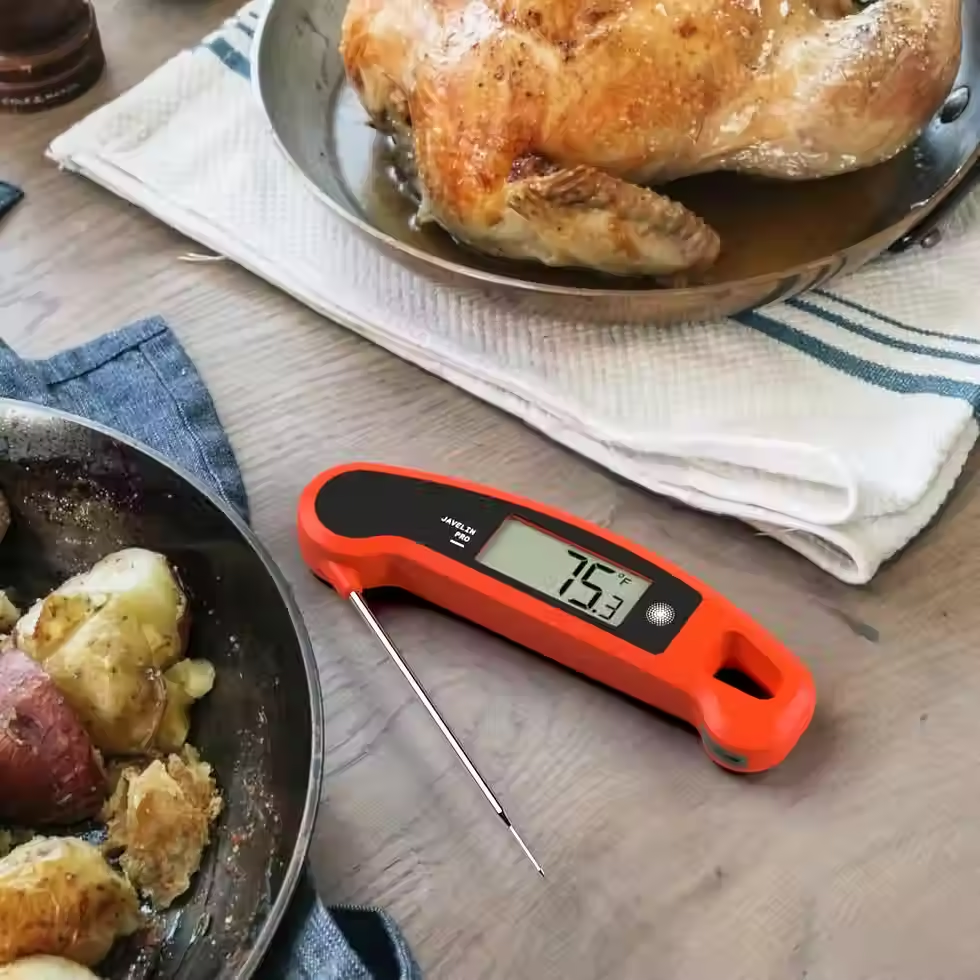
Lavatools Javelin Pro Classic — Best Value: Nearly matches the Thermapen's speed and accuracy at less than half the price — a smart pick if you want a genuinely good thermometer without the premium cost.
MEATER Plus Wireless Meat Thermometer — Best for Hands-Off Monitoring: A leave-in wireless probe that tracks temperature on your phone for hours while the turkey's in the oven — genuinely useful when you'd rather be with your guests than checking the oven every 20 minutes.

Serving & Hosting Essentials
A few more things that make the meal itself run smoothly once the turkey's out of the oven:
A carving knife and fork set — a proper carving knife makes noticeably cleaner slices than a standard chef's knife.
A fat separator — turns pan drippings into smooth gravy without the greasy layer on top.
Warming trays or chafing dishes — if your sides are ready before the turkey, keeping everything at temperature matters; see our catered event hosting guide for specific picks.
Extra folding tables and chairs — if your group has outgrown your dining room, our tailgate essentials guide covers solid, affordable options that work just as well indoors.
FAQ
How long does it take to thaw a frozen turkey? In the refrigerator, plan on roughly 24 hours for every 4 to 5 pounds — a 16-pound turkey needs about 3 to 4 days. If you're short on time, a cold-water thaw works in about 30 minutes per pound, changing the water every 30 minutes.
What temperature should a turkey be cooked to? The thickest part of the thigh should reach 165°F. Since carryover cooking continues after the turkey leaves the oven, many cooks pull it at 160–162°F and let it rest.
How do I keep my turkey from drying out? Brining or dry-brining ahead of time helps significantly, as does not overcooking it — this is exactly where a reliable meat thermometer earns its keep, since guessing by time alone is the most common cause of a dry turkey.
What can I cook if I forgot to thaw the turkey? You can cook a frozen turkey directly from frozen — it just takes about 50% longer than the standard cook time, and any stuffing needs to be cooked separately since it won't reach a safe temperature in time.
The Bottom Line
Thanksgiving hosting stress mostly comes down to timing and equipment, not skill — spread the prep out over the week before, and let a good roasting pan and a real thermometer take the guesswork out of the one dish everyone's watching. Everything else on the table is more forgiving than the turkey.


